Damascus steel is not a recipe. It is a relationship between the smith and the material — forged through heat, repetition, and a feel for the living pattern inside the steel.
Damascus Steel
No two patterns are the same.
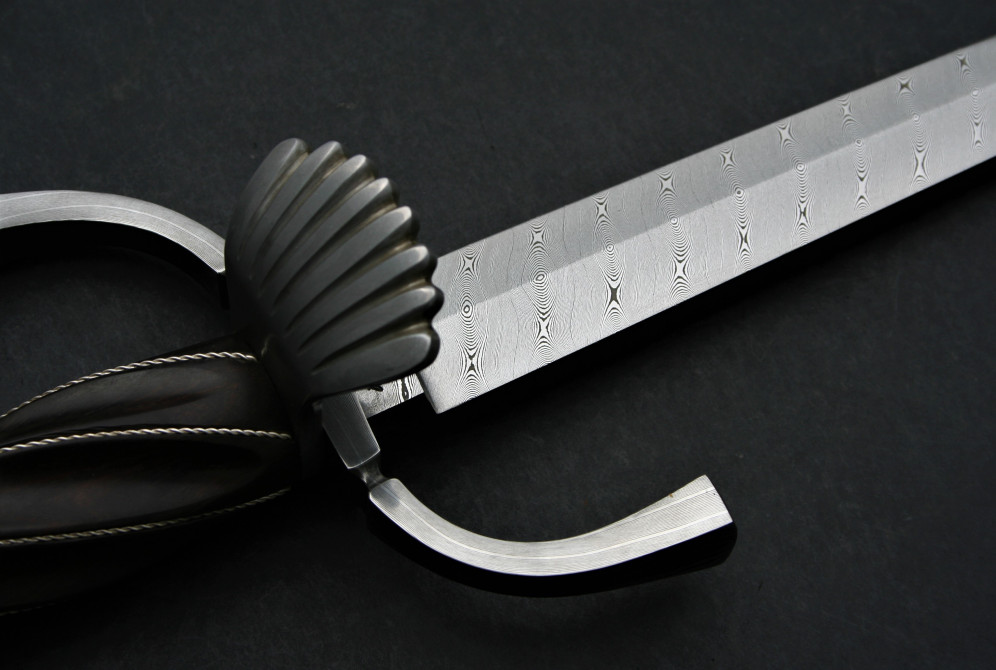
Damascus steel is created by forge-welding multiple layers of high-carbon steel billets together under extreme heat, then folding and drawing them out repeatedly. The process — called pattern-welding — creates hundreds of interlocked layers in the finished blade.
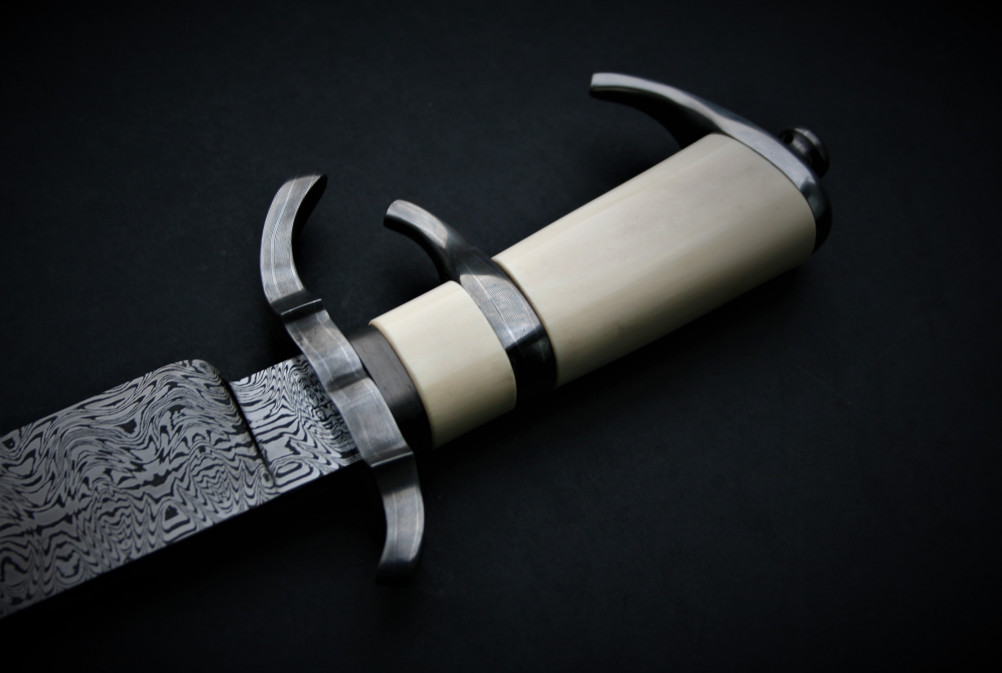
When the blade is acid-etched, the different steels react at different rates — revealing the flowing, watered pattern unique to every piece. No two billets fold the same way. The pattern is not designed; it emerges.
The Process
From Raw Steel to Finished Blade
01
Steel Selection & Billet Prep
Philip selects high-carbon steel billets — typically two or more grades — chosen for their differential hardness and how their layers will interact under acid etch. The billet stack is cut to size and cleaned before the forge is lit.
02
Forge Welding & Folding
The stack is heated to welding temperature and hammered under the press or by hand on the anvil until the layers fuse. This process is repeated until the desired layer count is reached. Dunn Blades Damascus typically runs 200–400+ layers.
03
Profile & Hollow Grind
The blade profile is cut from the forged billet and rough-ground on the belt grinder. The hollow grind is then worked in by hand, defining the cutting geometry and taper of the finished knife.
04
Heat Treatment
The blade is hardened by heating to critical temperature and quenching in oil, then tempered in an oven at controlled temperature to relieve stress and achieve the target hardness.
05
Etch & Finish
The hardened blade is hand-sanded through progressive grits to reveal a mirror finish, then etched in ferric chloride acid — pulling the Damascus pattern to the surface. Every pattern that appears is unique.
06
Handle Fitting
Handle scales or a full handle block are fitted, shaped, and finished entirely by hand. Materials — African wood, fossil bone, G10 composite, or Kudu horn — are chosen for the specific knife and client.
Handle Materials
The Handle Completes the Blade
Natural Wood
Stabilised African hardwoods — Ironwood, Camelthorn, Tamboti — finished to a deep lustre. Warm, traditional, and built to last decades.
Fossil Bone
Ancient bone, mineralised over thousands of years into stone. Cream, ivory, and pale tan tones that contrast beautifully with dark Damascus.
G10
A fibreglass laminate used in tactical and high-use knives. Impervious to moisture, oils, and impact. Available in black, olive, and grey.
Kudu Horn
Harvested from South African kudu, this naturally curved horn is shaped and polished to reveal rich brown and cream tones. A distinctly African material.
Official Member
The Knifemakers Guild of Southern Africa
Philip Dunn is an official member of the Knifemakers Guild of Southern Africa — the premier body for professional blade craftsmen on the continent. Membership is awarded only to smiths who demonstrate consistent quality, technical mastery, and a commitment to the craft.
The Guild maintains strict standards for Damascus work, heat treatment, and finish. Every Dunn Blades knife is made to — and beyond — those standards.
knifemakers.co.za
Interested?
Own a Piece of the Craft
Shop available blades or commission one made specifically for you.